

Stop Guessing Which Deals Are About to Slip
Why GoHighLevel Pipelines Improve Sales Performance
Ask most small business owners how many deals they have open and you will get a confident answer. Ask which of those deals has gone quiet for eleven days and the answer is usually a pause.
That gap is where revenue leaks. Not because anyone is careless, but because deals live in too many places at once: a few in someone's inbox, a couple in a notebook, the rest in a spreadsheet that was last updated on a quiet Tuesday.
A pipeline fixes that by giving every deal one place to sit and one clear status. In GoHighLevel these are called Opportunities, and they are one of the more direct ways to lift sales performance without hiring anyone or spending more on ads.
The Real Cost of Tracking Deals in Your Head
When there is no shared pipeline, three things tend to happen. The loudest lead gets the attention rather than the best one. Follow up depends on whoever happens to remember. And when someone is away, their deals quietly stall until they return.
None of these show up as a dramatic loss. They show up as a slightly lower close rate every month, which is much harder to notice and much more expensive over a year.
A Live View of Every Deal in Motion
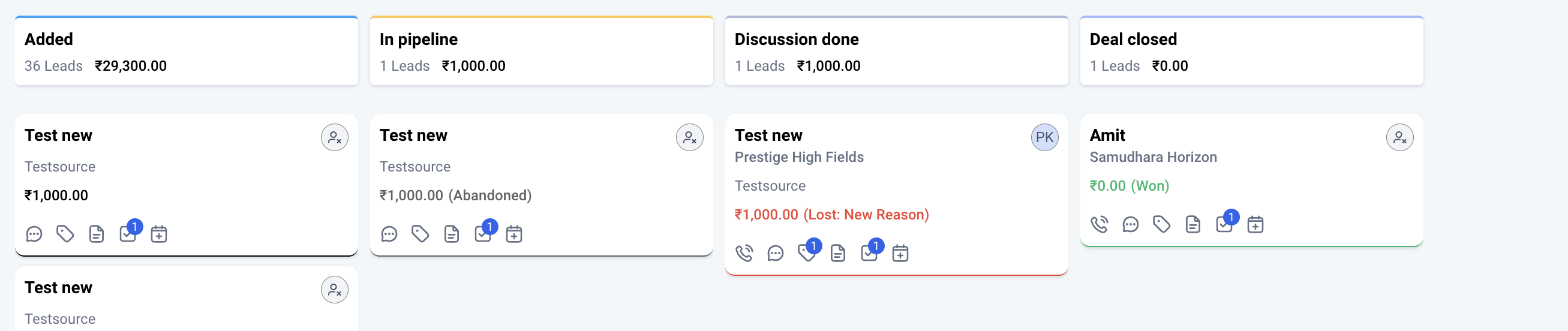
The pipeline board puts every open deal on one screen, sorted into the stage it has reached. You can see what is new, what is waiting on a quote, and what is close to signing, without opening a single record.
Each card carries the value of the deal and the contact attached to it, so the board doubles as a rough forecast. Dragging a card from one stage to the next takes a second, which matters, because a system only stays accurate if updating it is genuinely easy.
Keep Separate Pipelines for Separate Jobs
Most businesses run more than one kind of sale. A new enquiry from an ad behaves nothing like a renewal or a referral, so forcing them through the same stages makes the board harder to read.
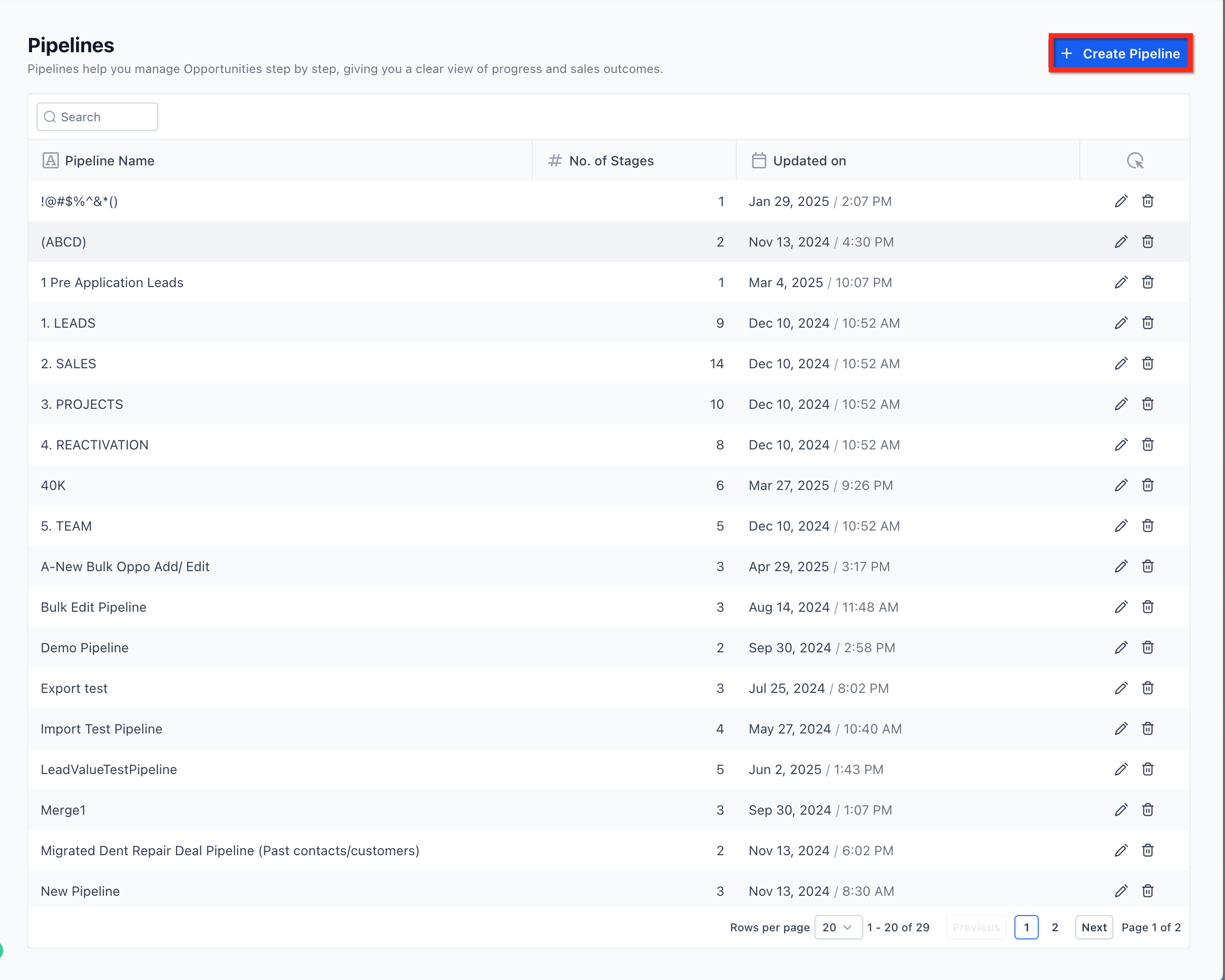
GoHighLevel lets you run several pipelines side by side, each with its own stages. A common setup is one pipeline for new business, one for existing customers, and one for anything with a longer approval process.
Build Stages That Match How You Actually Sell
The most useful pipelines describe what really happens rather than a textbook sales process. If your work involves a site visit before a quote, that deserves its own stage, because it is a point where deals commonly stall.
A practical rule is to keep stages few and unambiguous. Anyone on the team should be able to look at a deal and know which stage it belongs in without debating it.
Name stages after actions, such as Quote Sent, rather than vague labels like In Progress
Aim for roughly five to seven stages so the board stays readable
Add a stage wherever deals repeatedly get stuck, so the problem becomes visible
Agree as a team what moves a deal forward, then keep it consistent
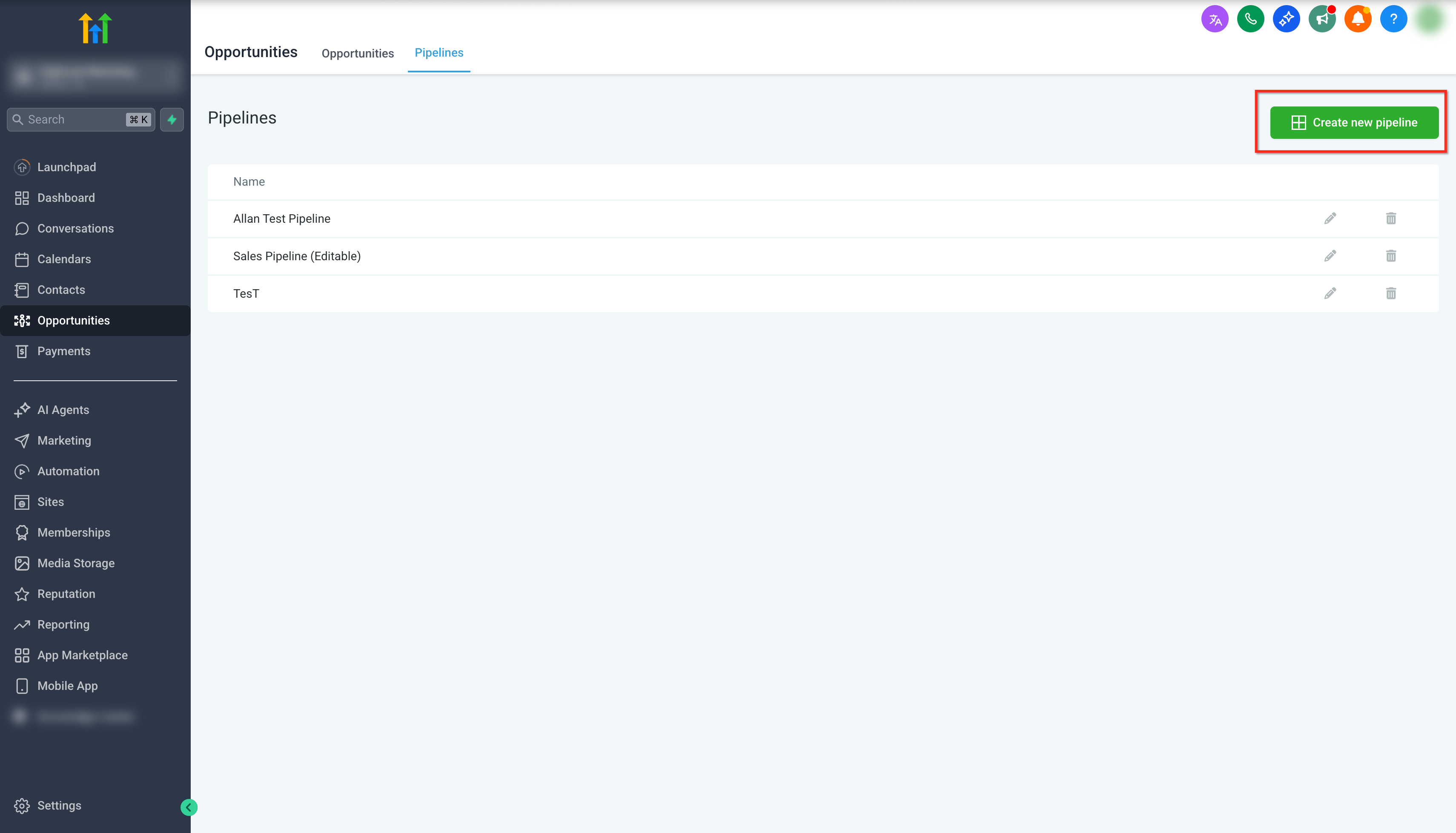
Creating a pipeline and defining the stages a deal moves through.
Every Deal Attached to the Right Person
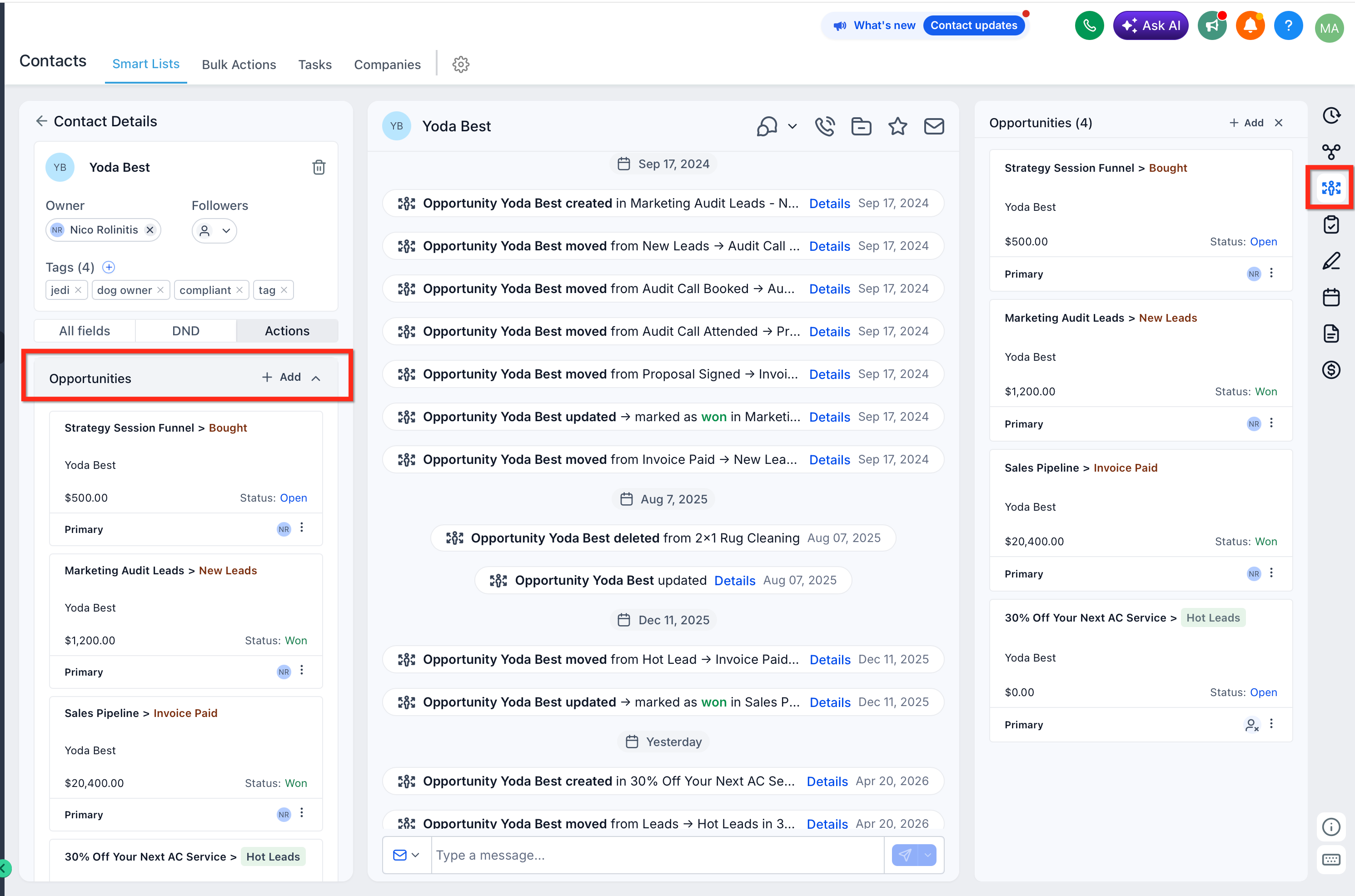
An opportunity is linked to a contact record, so the deal sits alongside the full history of that relationship: the messages sent, the calls made, the appointments booked, and any earlier deals that were won or lost.
That context is what makes follow up feel personal instead of generic. Before picking up the phone, anyone on the team can see what was already discussed, which avoids the awkward call where the customer repeats information they gave last week.
Automation That Moves Deals Along
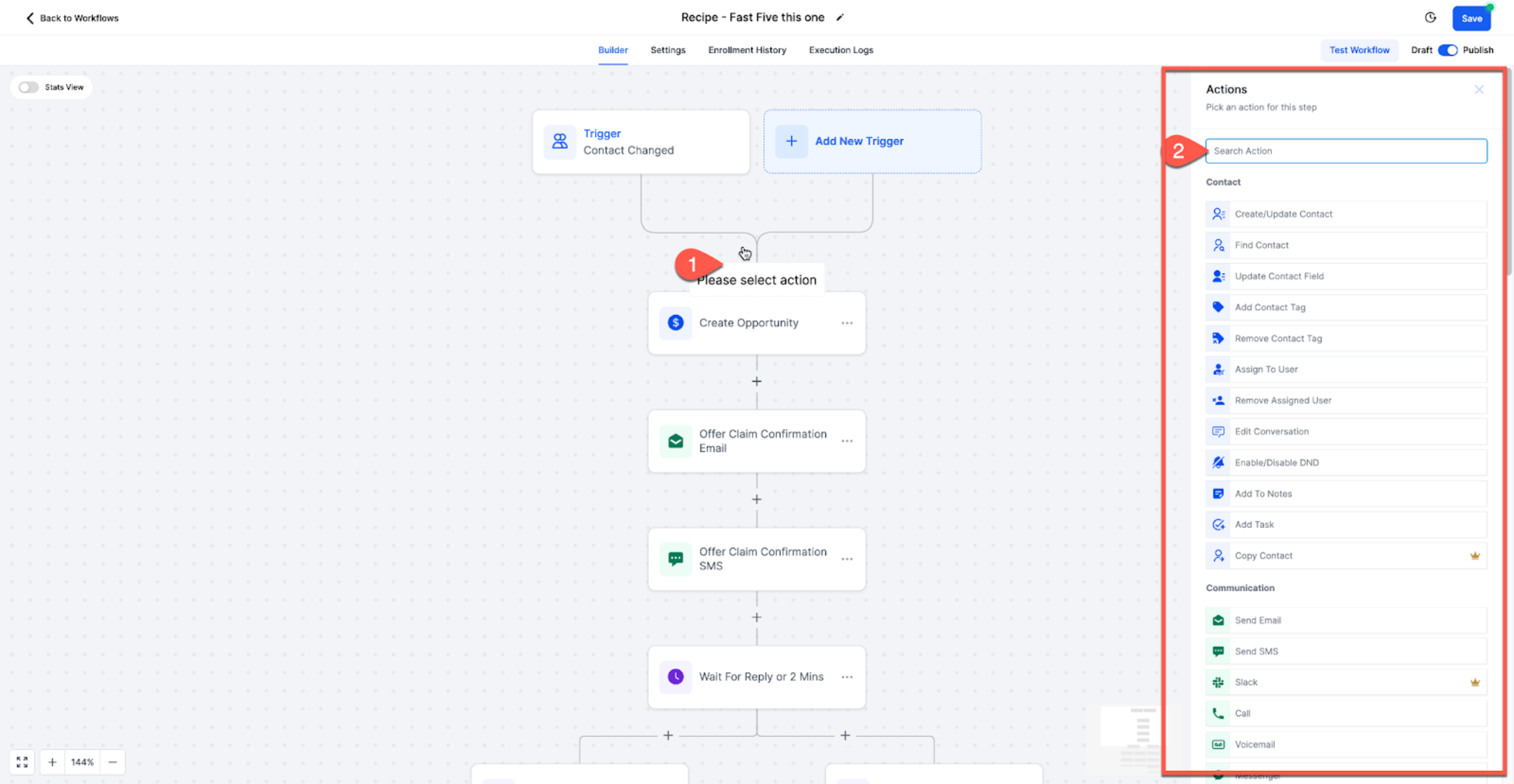
This is where a pipeline stops being a tidy list and starts affecting results. Because stages are data, they can trigger workflows. Moving a deal to Quote Sent can start a short follow up sequence. A deal sitting untouched for a week can raise a task for its owner.
The value is not the individual message. It is that follow up stops depending on memory. The deals that usually go cold are the ones nobody consciously decided to drop, and automation is what keeps those moving.
Numbers That Show Where Revenue Is Getting Stuck
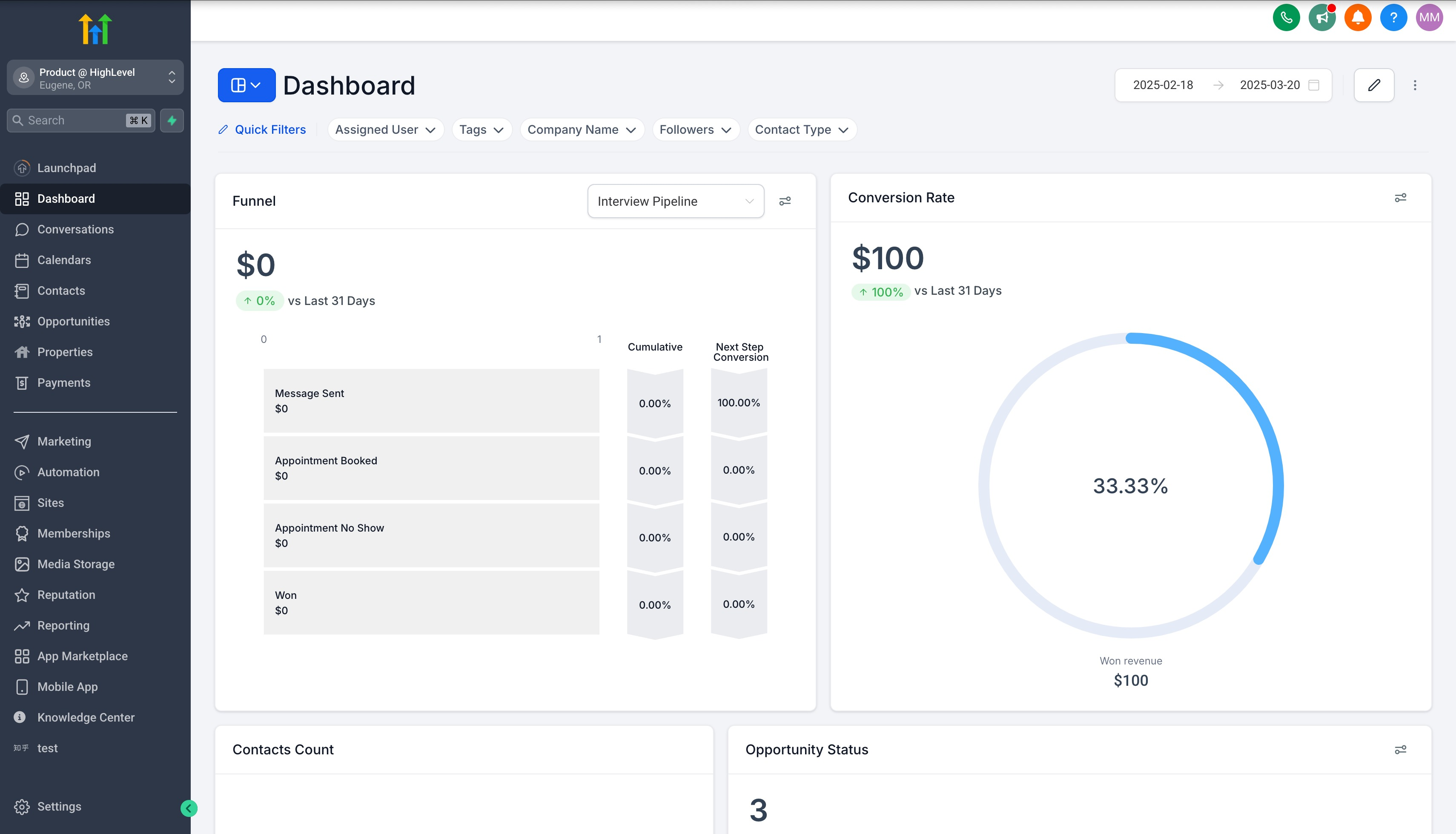
Once deals move through defined stages, reporting becomes genuinely useful. The dashboard can show pipeline value, conversion rate, and how deals are spread across stages, which turns a vague sense that things are slow into something specific.
A pile up at one stage is usually the most valuable thing on the screen. If plenty of quotes go out and few come back, the problem is not lead volume, and no amount of extra advertising will fix it.
Habits That Keep a Pipeline Honest
A pipeline only helps if it reflects reality, and that comes down to a few small habits rather than any feature.
Update stages as things happen rather than in a weekly catch up
Close out dead deals honestly so the forecast stays believable
Review the board as a team, focusing on what has not moved
Keep deal values roughly accurate, since the forecast depends on them
Conclusion
Pipelines improve sales performance for an unglamorous reason. They make the state of every deal visible, which means fewer opportunities are forgotten and follow up no longer relies on who remembers what.
With stages that match how you really sell, automation carrying the routine follow up, and reporting that shows where deals stall, the same number of leads tends to produce more closed business. For most teams that is a far cheaper improvement than buying more traffic.
Frequently Asked Questions
What is the difference between a pipeline and an opportunity in GoHighLevel?
A pipeline is the set of stages a deal travels through. An opportunity is an individual deal moving along that pipeline, linked to a contact and carrying its own value and stage.
How many pipelines should a small business have?
Usually two or three. One for new business and one for existing customers covers most situations, and you can add another when a type of sale clearly follows different steps.
Can GoHighLevel move deals between stages automatically?
Yes. Workflows can move a deal when something happens, such as a form being submitted or an appointment being booked, though many teams prefer to move later stages manually.
Do pipelines work for service businesses rather than product sales?
They do. Service businesses often benefit more, because the sales process involves steps like site visits, quotes, and approvals that are easy to lose track of.
Can Wispcode build this pipeline setup for us?
Yes. We map your current sales process, build the pipelines and stages around it, and connect the follow up automation so deals keep moving without manual chasing.
Need Expert Help with GoHighLevel?
New to GoHighLevel and ready to get started? Buy your GoHighLevel account here and launch with confidence.
Already know what you need and want our team to handle everything, from complete setup and customization to funnels, workflows, automations, CRM, and pipelines? Click here.