When Is a Custom GoHighLevel Integration Worth It?
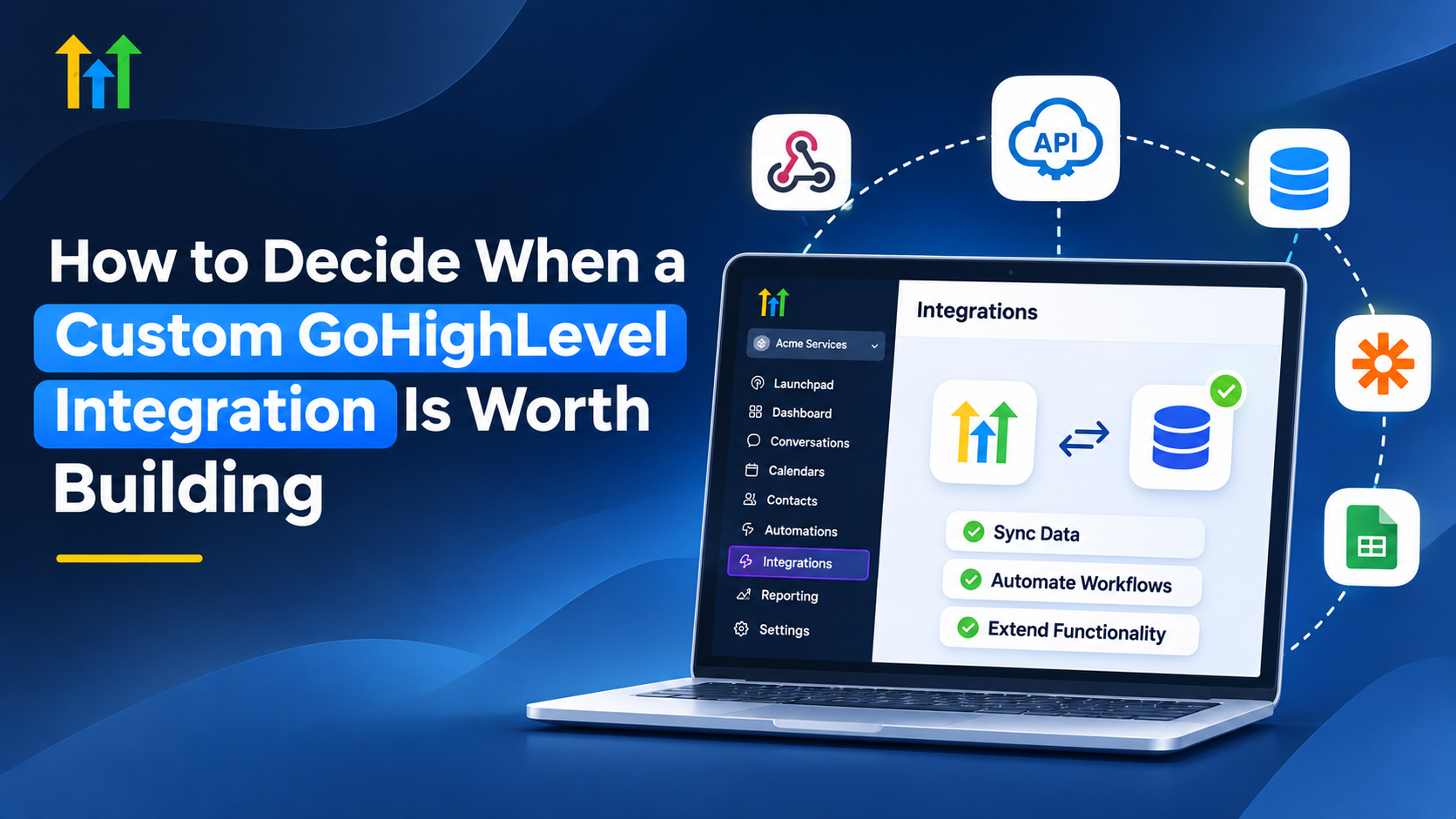
How to Decide When a Custom GoHighLevel Integration Is Worth Building
Businesses often use multiple software platforms to manage customer relationships, appointments, payments, and daily operations. While these tools serve different purposes, disconnected systems can create repetitive tasks, inconsistent information, and unnecessary delays.
GoHighLevel provides CRM and automation capabilities that help businesses organize their operations. However, some companies eventually encounter requirements that standard integrations cannot fully address.
This raises an important question: When is a custom GoHighLevel integration actually worth building?
The answer depends on business needs, technical requirements, implementation costs, and the long-term value an integration can deliver.
What Is a Custom GoHighLevel Integration?
A custom GoHighLevel integration connects GoHighLevel with another software platform to support specific business processes that existing integrations may not handle effectively.
For example, a service company might use GoHighLevel to manage leads while relying on separate software for scheduling jobs, tracking projects, or managing customer accounts.
If employees manually transfer information between these systems, an integration could help automate the process.
Businesses can connect applications through native integrations, third-party automation platforms such as Zapier and Make, webhooks, or custom API development.
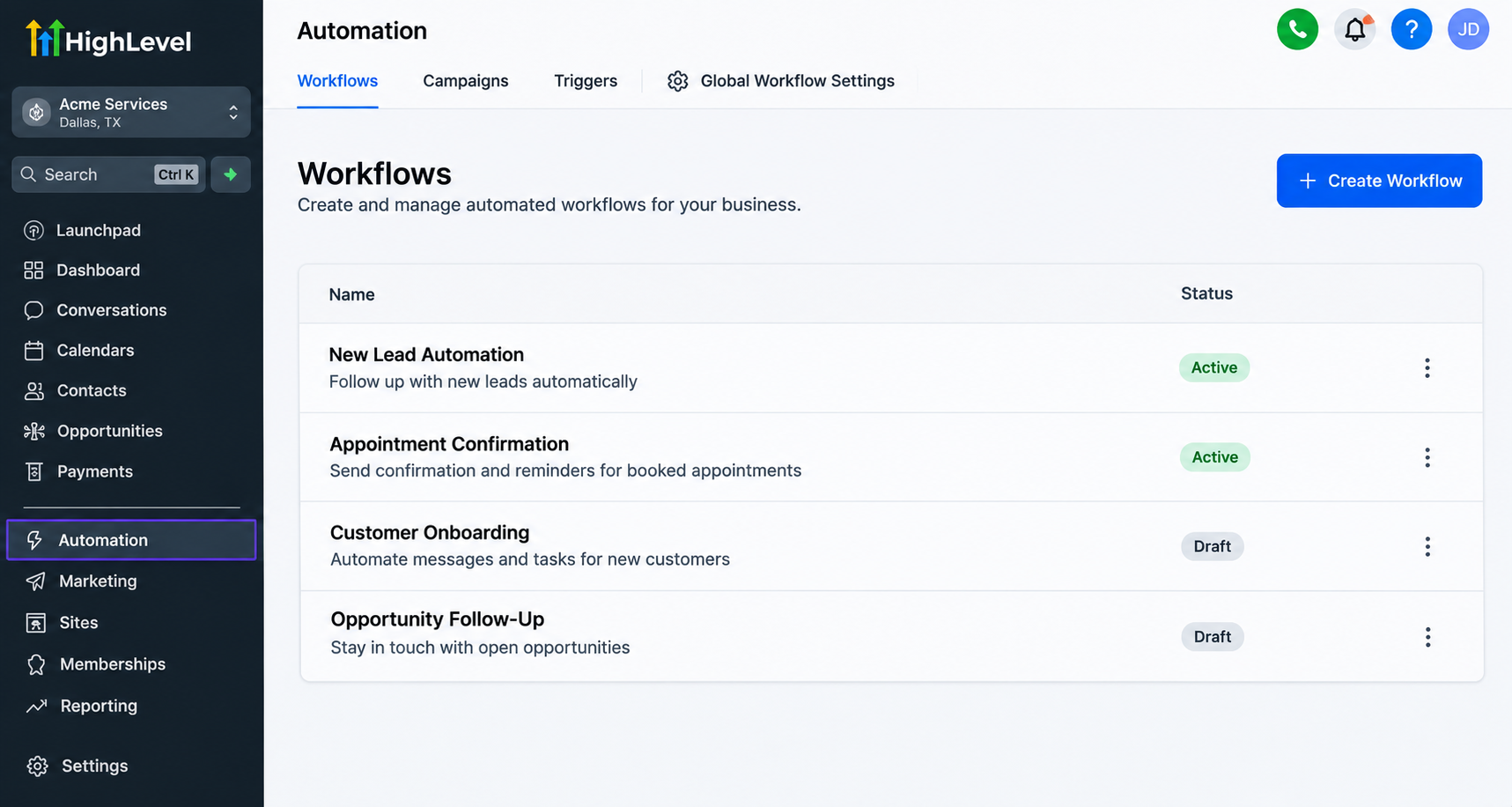
However, not every business requirement needs custom development. Sometimes, existing GoHighLevel workflow automation features can accomplish the same objective with less complexity.
Five Signs a Custom GoHighLevel Integration May Be Worth Building
1. Your Team Spends Too Much Time on Manual Tasks
Repetitive administrative work is one of the clearest reasons to consider custom integration.
Employees may spend hours copying customer information, updating records, or transferring appointment details between applications.
A custom integration can potentially reduce this workload by allowing systems to exchange information automatically.
Before investing, businesses should calculate how much employee time these activities consume and whether automation would produce meaningful savings.
2. Your Business Needs Better Data Synchronization
When customer information exists across several platforms, inconsistent records can create operational problems.
For example, a customer may update their contact information in one system while another application continues using outdated details.
A custom CRM integration may help maintain consistent information between connected applications.
However, businesses must determine which platform controls each record and how conflicting updates should be handled.
3. Existing Integrations Cannot Meet Your Requirements
GoHighLevel supports various integration approaches, but not every business requirement can be handled through existing connectors.
Some organizations need specialized data mappings, additional validation, or workflows involving multiple systems.
When native functionality and third-party tools cannot reliably handle these requirements, custom API development may become a practical option.
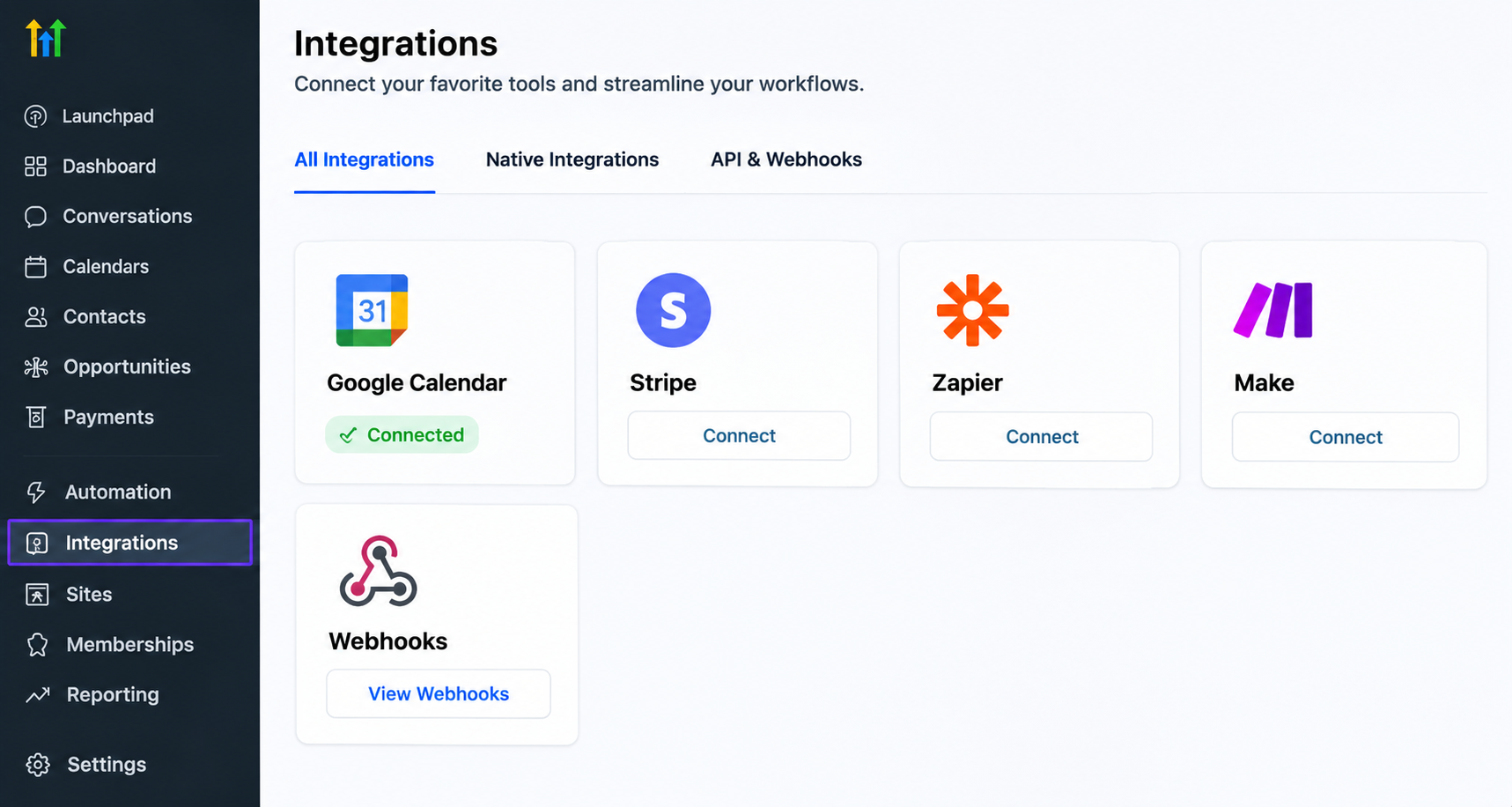
Before choosing this approach, businesses should verify that the required functionality is supported by the relevant APIs.
4. Your Business Processes Are Becoming More Complex
Growing businesses often develop workflows that involve several departments and software platforms.
For example, a company might need customer information verified in an external system before certain actions can proceed.
Such processes may require conditional logic, data validation, and error handling beyond what standard integrations provide.
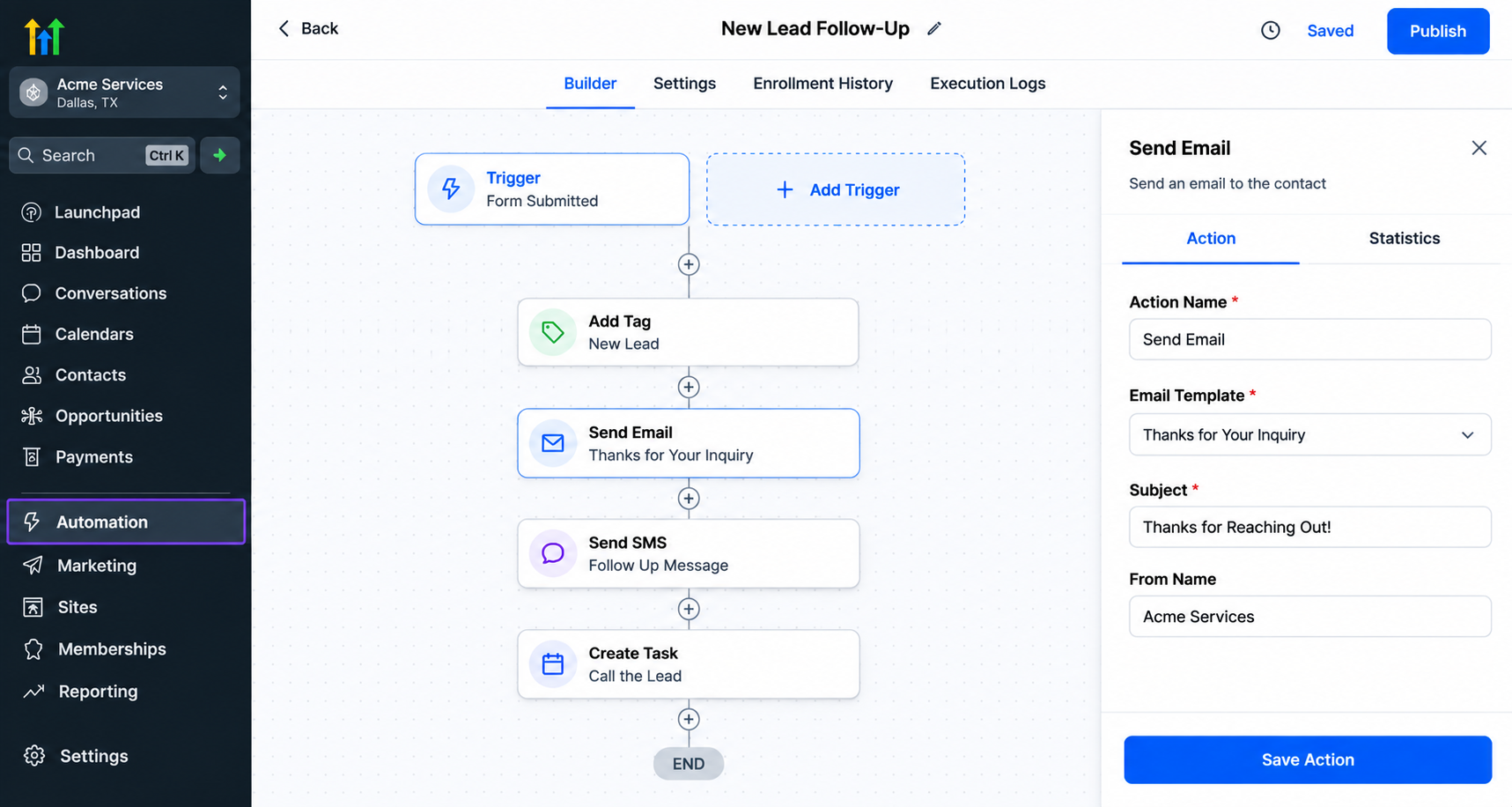
A custom integration can offer greater control over these operations when the necessary technical capabilities are available.
5. The Integration Can Deliver Measurable Business Value
Custom development should solve a meaningful business problem rather than simply introduce new technology.
Potential benefits include reduced administrative workload, fewer data-entry errors, improved processing speed, and better operational coordination.
Businesses should estimate these benefits before approving development.
An integration becomes more worthwhile when its expected financial and operational value exceeds its total cost.
When a Custom Integration Is Not Necessary
Not every disconnected system requires a custom solution.
If existing GoHighLevel features already support the required process, building additional software may introduce unnecessary costs.
Similarly, third-party platforms such as Zapier or Make may provide sufficient functionality for relatively straightforward automation requirements.
Custom development may also be unsuitable when business processes are frequently changing or the volume of manual work is relatively small.
Another important consideration is maintenance.
Custom integrations require ongoing monitoring, troubleshooting, and occasional updates as connected applications evolve.
Businesses should avoid development when these responsibilities outweigh the expected benefits.
How to Calculate the ROI of a Custom GoHighLevel Integration
Understanding the financial impact is essential before investing in a custom integration.
Start by estimating initial development expenses, testing costs, ongoing maintenance, hosting, and any applicable API or third-party service charges.
Next, calculate the operational value the integration could generate.
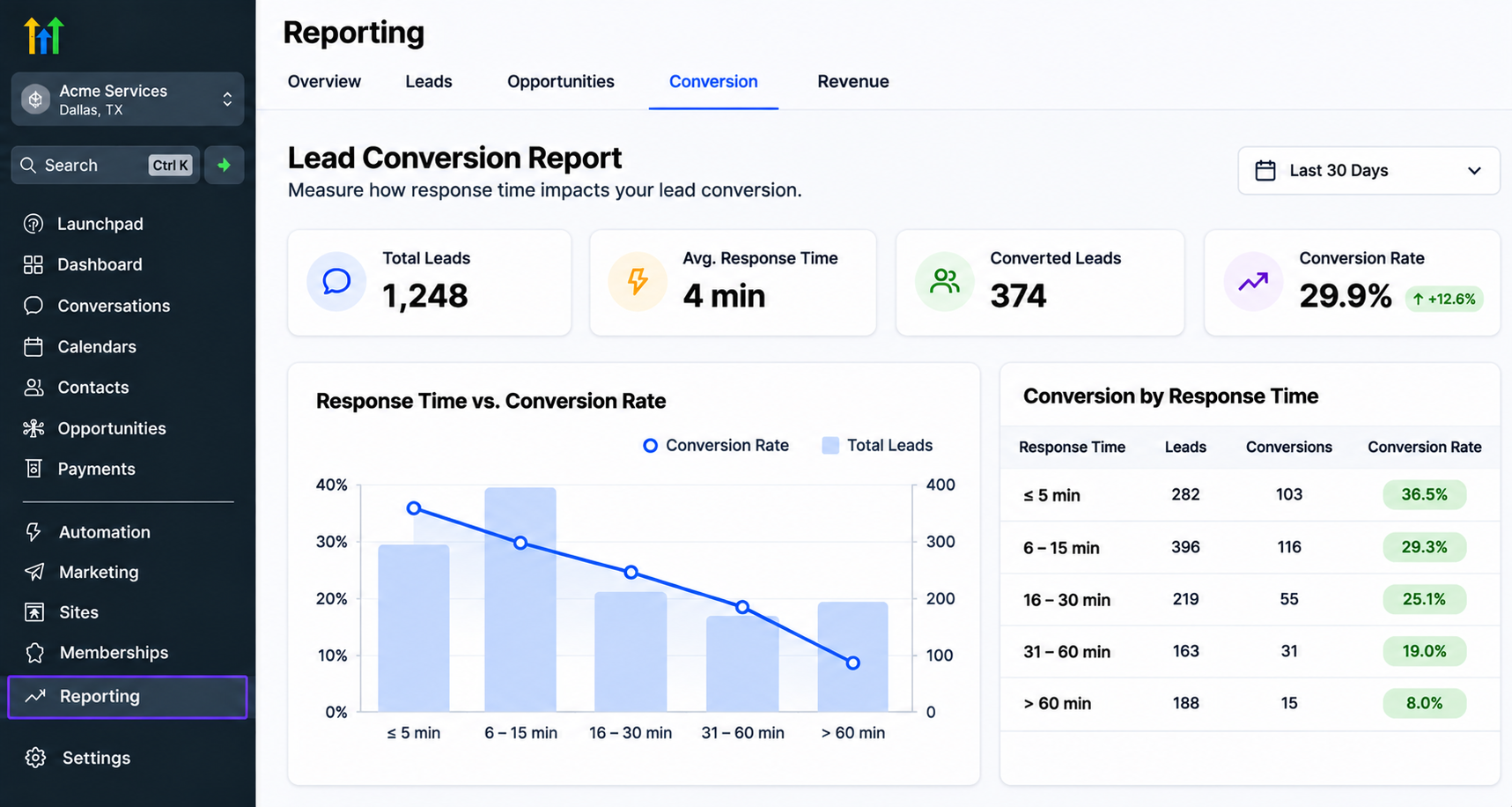
For example, imagine a business spends 40 hours monthly transferring information between systems. If employee time is valued at $25 per hour, the estimated monthly labor value is $1,000.
Suppose developing the integration costs $3,000, with an additional $150 in monthly operating and maintenance expenses.
The estimated monthly net savings would be $850.
At that rate, the business could recover its initial investment in approximately three and a half months.
These figures are hypothetical and do not represent guaranteed savings or typical industry costs.
Actual results depend on implementation quality, employee adoption, workflow reliability, and ongoing expenses.
Technical Considerations Before Building an Integration
Before starting development, businesses should confirm that GoHighLevel and the external application support the required integration methods.
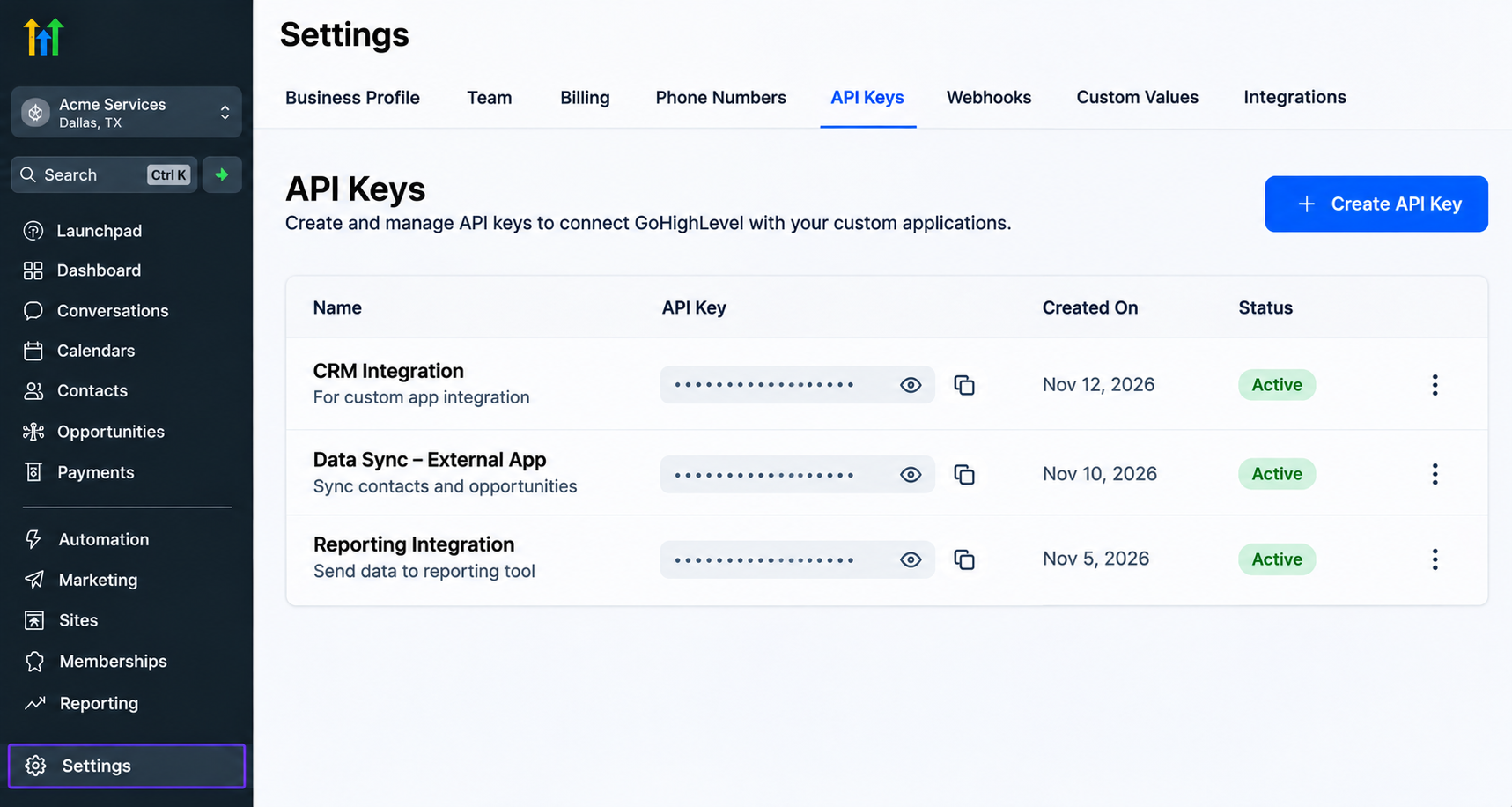
This includes reviewing available API capabilities, authentication requirements, permissions, and applicable usage limits.
Data security is equally important because integrations may exchange sensitive customer information.
Developers should also plan how the integration will handle failed requests, duplicate records, conflicting updates, and unexpected interruptions.
Logging, monitoring, and retry mechanisms can help identify problems and support reliable operations.
Finally, businesses should establish who will maintain the integration after implementation.
Without clear ownership and documentation, even a useful integration can become difficult to manage.
How to Make the Right Integration Decision
The best integration strategy begins with understanding the actual business problem.
Identify which tasks consume unnecessary time, create errors, or prevent systems from working efficiently.
Next, review existing GoHighLevel capabilities and available third-party integrations.
If those options cannot adequately address the requirement, evaluate custom development costs and potential business benefits.
Confirm technical feasibility before committing resources.
Whenever possible, begin with a small implementation that can be tested and improved before expanding.
This approach reduces unnecessary complexity and helps businesses make informed investment decisions.
Conclusion
A Custom GoHighLevel Integration is worth building when it addresses a genuine operational challenge, existing solutions cannot adequately meet the requirement, and the expected benefits justify the investment.
Although custom development can provide greater flexibility, it also introduces technical responsibilities and ongoing costs.
Businesses should evaluate their workflows, explore available integration options, calculate potential returns, and confirm technical feasibility before proceeding.
Ultimately, the right integration is not the most complicated solution. It is the one that makes business operations more efficient, reliable, and sustainable.
Frequently Asked Questions (FAQs)
1. When should a business consider a custom GoHighLevel integration?
A business should consider a custom GoHighLevel integration when existing features or third-party tools cannot meet its operational needs. Custom integrations can be valuable for reducing repetitive tasks, connecting business-critical systems, and improving workflow efficiency when the expected benefits justify the costs.
2. Can GoHighLevel integrate with software that does not have a native integration?
Yes, GoHighLevel can potentially connect with software that does not offer a native integration through supported APIs, webhooks, or third-party automation platforms such as Zapier and Make. However, the integration depends on the technical capabilities and available access permissions of both systems.
3. How much does a custom GoHighLevel integration cost?
The cost of a custom GoHighLevel integration depends on development complexity, required functionality, data synchronization needs, and ongoing maintenance. Simple integrations may require less development effort, while advanced solutions involving multiple systems and complex workflows generally cost more.
4. Is it better to use Zapier or Make instead of building a custom GoHighLevel integration?
Zapier and Make are often suitable for straightforward automation tasks because they reduce development time and technical complexity. However, custom API integrations may be more appropriate when businesses require specialized functionality, complex processing rules, or greater control over data exchanges.
5. What are the biggest risks of building a custom GoHighLevel integration?
Common risks include data synchronization errors, security vulnerabilities, API limitations, unexpected development expenses, and ongoing maintenance requirements. Businesses can reduce these risks through proper planning, secure authentication, thorough testing, error handling, and regular monitoring.
Need Expert Help with GoHighLevel?
New to GoHighLevel and ready to get started? Buy your GoHighLevel account here and launch with confidence.
Already know what you need and want our team to handle everything, from complete setup and customization to funnels, workflows, automations, CRM, and pipelines? Click here.