
GoHighLevel Funnel vs Website: Which One Should You Use?
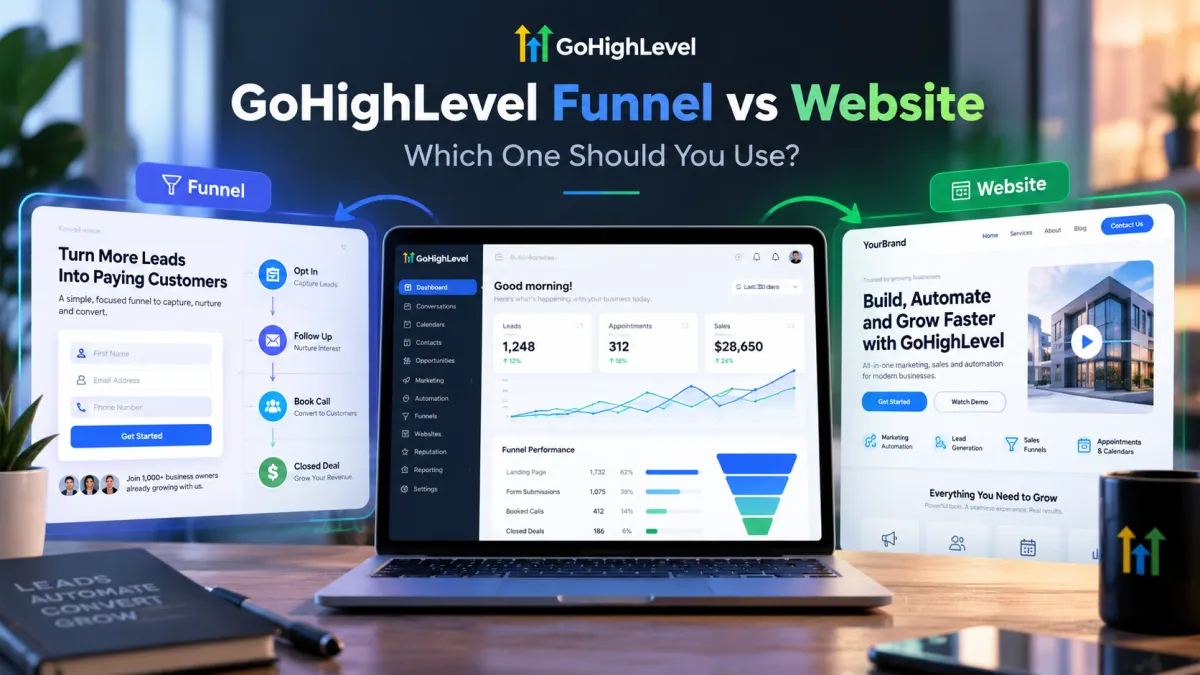
GoHighLevel Funnel vs Website: Which One Should You Use?
Someone clicks your ad, looks around, and leaves. Was the offer wrong, or did the page give them too many places to go?
That's why the GoHighLevel Funnel vs Website question matters. Both can turn visitors into leads, but they serve different purposes. The right choice depends on what people need and what you'd like them to do next.
What Is a GoHighLevel Funnel?
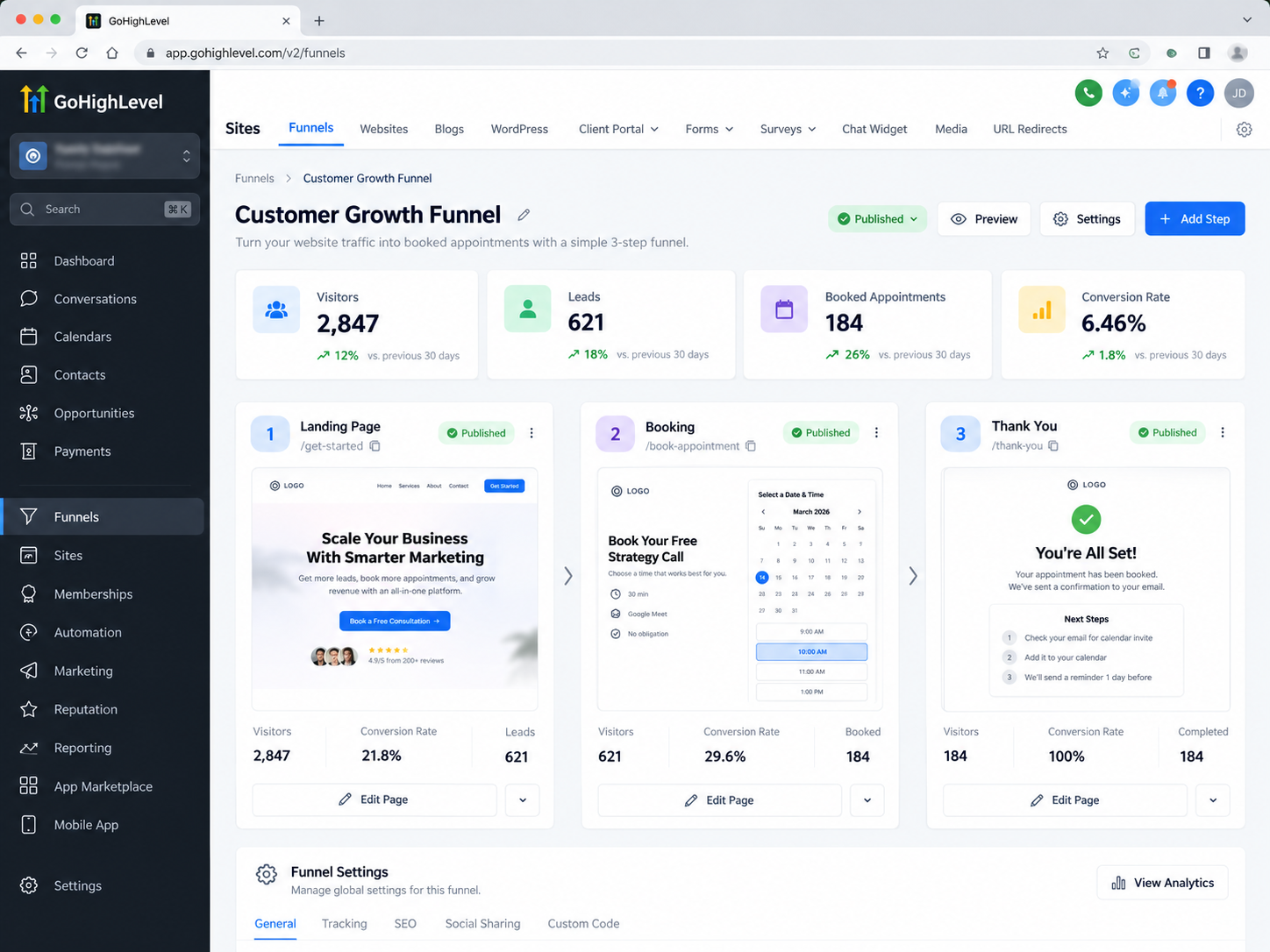
A funnel offers a planned route to one action. Someone lands on an offer page, fills out a form or books a call, and reaches a confirmation page.
GoHighLevel lets you build those pages as connected funnel steps, with forms and booking calendars where they make sense.
An HVAC company promoting seasonal maintenance could send ad visitors directly to the offer. The page answers key questions and makes scheduling easy.
That doesn't mean stripping away useful information. A customer review, a clear explanation of the offer, or a few honest answers can make the decision easier. A funnel doesn't have to be pushy. It just needs a clear purpose.
What Is a GoHighLevel Website?
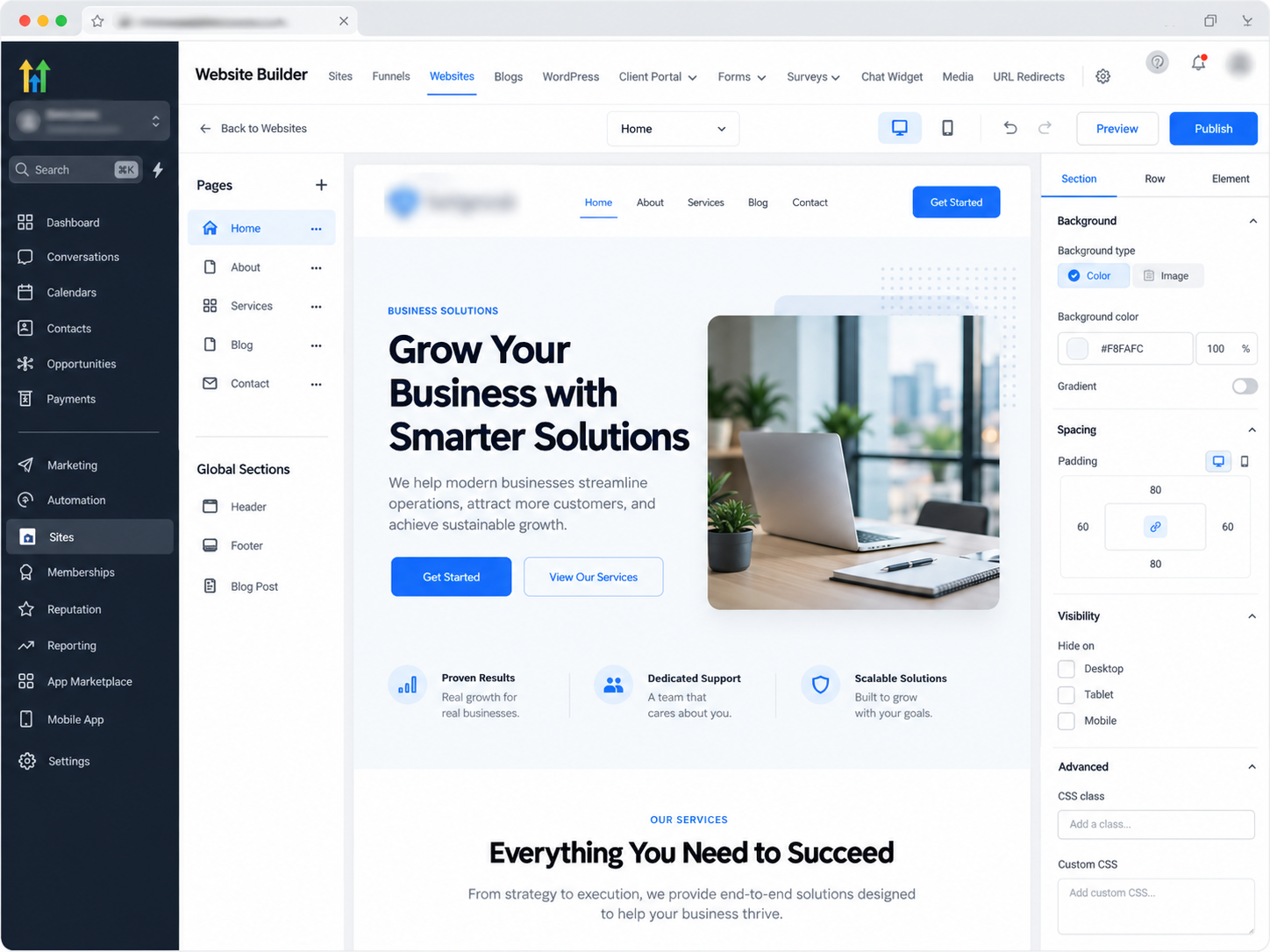
A website serves people researching a business. They might explore services, team information, past projects, or answers to common questions.
With GoHighLevel, you can create pages such as Home, About, Services, Blog, and Contact, then add forms or booking options wherever they're useful.
A homeowner comparing bathroom renovations and kitchen upgrades needs more than one promotional page. A website makes that exploration easier.
People may arrive through search, a referral, or even a business card, and not everyone is ready to book immediately. A website gives them somewhere to return. It can still generate leads without sending visitors through a separate funnel.
GoHighLevel Funnel vs Website: The Practical Differences
At first glance, GoHighLevel funnels and websites might seem quite similar. Both allow you to create customized pages, add forms, offer appointment bookings, and optimize content for search engines. However, the real difference lies in how visitors interact with them and what you want those visitors to accomplish.
A website gives people the freedom to explore your business. They can browse your services, read blog posts, check testimonials, and contact you whenever they're ready. A funnel, on the other hand, is usually designed to keep visitors focused on one specific goal. Rather than offering multiple navigation options, it guides them through a more direct journey, such as requesting a quote or scheduling a consultation.
Another important difference is how you measure results. GoHighLevel funnels offer step-level conversion tracking and built-in split testing, allowing you to compare different page variations. Websites are generally better suited to presenting broader business information and supporting ongoing content strategies.
Both can generate leads and support SEO, but neither automatically guarantees better results. Ultimately, the right choice depends on your audience, marketing goals, and the experience you want to create for potential customers.
When Should You Use a GoHighLevel Funnel?
Funnels work well when you know why someone arrived: an ad for a consultation, webinar registration, or downloadable guide.
Suppose a roofing contractor runs an ad offering storm-damage inspections. A dedicated funnel can explain the service, show relevant proof, and give visitors a straightforward way to request an appointment.
The next step should be obvious. You can also test funnel-page variations instead of guessing which headline or layout works.
When Should You Use a GoHighLevel Website?
A website makes sense when people need context. A marketing agency offering SEO, automation, and design should explain each service before asking for a consultation.
Individual service pages, case studies, and helpful blog articles give them that opportunity. GoHighLevel's blogging tools can support publishing and managing SEO details for this content.
That helps build credibility and attract search visitors over time. But a website doesn't guarantee rankings; its information must still be relevant and useful.
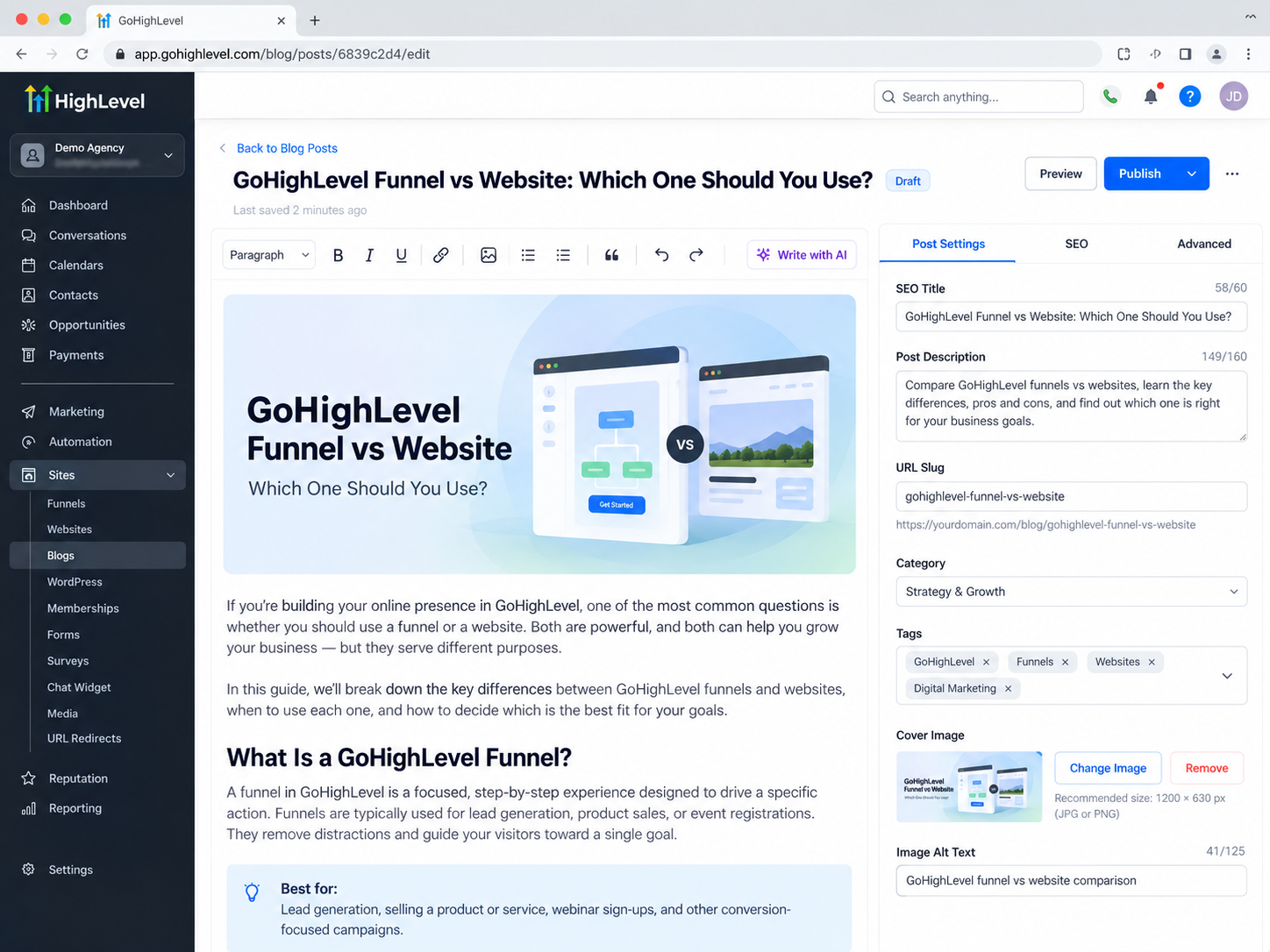
Can You Use Both Funnels and Websites in GoHighLevel?
Yes. For some businesses, that's the most practical setup.
A contractor might use a website for services and homeowner advice, then a funnel for an ad campaign. People researching repairs can browse; visitors responding to a specific offer can book directly.
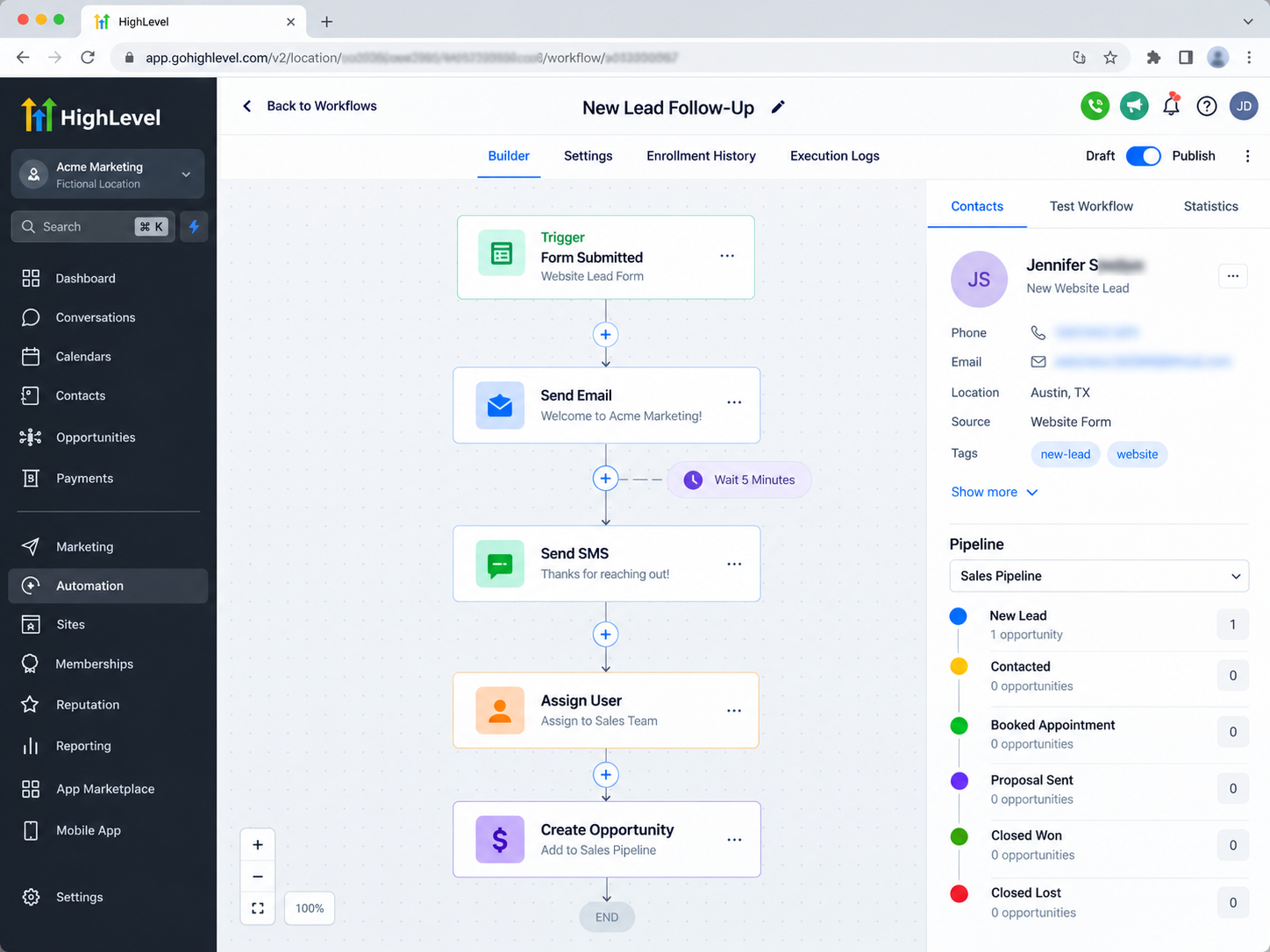
Both can collect information through GoHighLevel forms or calendars. With the right configuration, those contacts can be managed in the CRM and followed up through workflows.
Just remember that reminders and follow-up messages need to be set up and tested. They don't happen simply because a page is published.
Which One Should You Choose?
Start with the question your visitor is trying to answer.
If they're asking, “Who is this business, and can I trust them?” a website is a sensible starting point. If they're asking, “How do I claim this offer or book this service?” a funnel may fit better.
You can use both. Decide based on your traffic, desired action, and success metrics.
Final Thoughts
GoHighLevel gives you the tools to build both, but the platform can't decide what your customers need. A website helps people get familiar with your business; a funnel makes a particular next step easier to follow.
Build around that distinction, and your pages will have a much clearer job to do.
Frequently Asked Questions (FAQs)
1. What is the main difference between a GoHighLevel funnel and a website?
The main difference is how visitors move through them. A website allows people to explore different pages, learn about your services, and decide when to contact you. A funnel usually follows a more focused path, encouraging visitors to complete a particular action, such as booking an appointment or requesting a quote.
2. Is a GoHighLevel funnel better than a website for generating leads?
Not necessarily. Funnels can work particularly well for targeted campaigns where visitors already have a specific interest. Websites can also generate quality leads through service pages, contact forms, and organic search traffic. What matters most is your audience, offer, and overall marketing strategy.
3. Can I use a GoHighLevel funnel and website together?
Yes, and it often makes sense. Your website can introduce your business, explain your services, and attract organic visitors, while dedicated funnels can handle specific advertising campaigns. Both can connect with GoHighLevel's CRM to help you organize and follow up with leads.
4. Are GoHighLevel funnels good for SEO?
Yes, GoHighLevel funnels support SEO settings, including page titles and meta descriptions. However, ranking depends on content quality, search intent, and other SEO factors. Funnels are often better suited to promoting specific offers, while websites provide more room for broader content strategies.
5. Can I add appointment booking to both GoHighLevel funnels and websites?
Yes. GoHighLevel allows you to add booking calendars to both. Visitors can schedule appointments directly from a website page or a funnel step, making it easier for businesses to capture inquiries and manage consultations without sending prospects to an unrelated booking page.
6. Does GoHighLevel support A/B testing for funnels and websites?
GoHighLevel provides built-in split testing for funnel pages. This allows you to compare different versions of a page and measure their conversion performance. The standard website builder does not offer the same native page split-testing functionality.
Need Expert Help with GoHighLevel?
New to GoHighLevel and ready to get started? Buy your GoHighLevel account here and launch with confidence.
Already know what you need and want our team to handle everything, from complete setup and customization to funnels, workflows, automations, CRM, and pipelines? Click here.